ART ACADEMY
Ensuring outstanding teaching in Art & Design

KLIMT PATTERNS (Lower Key Stage 2)

Teaching Pack
-
5 Lesson Presentation Slides
-
Knowledge Organiser
-
Medium Term Planning
-
Teaching resources
-
Additional Presentation: Elements of Art
-
Additional Presentation: Using Sketchbooks
-
Additional Presentation: 5 Minute Drawing
-
Additional Presentation: Art Museums
-
Additional Presentation: Still Life Museum
Unit Overview
Sequence of Learning for Teachers
In this unit of work children learn about the art and artistic style of the Austrian painter Gustav Klimt. The unit focuses on consolidating children’s knowledge of colour mixing and understanding of pattern as well as developing painting techniques using different paint media. This unit also provides opportunities for children to understand how techniques can be developed by mimicking the work of other artists and how creative ideas are developed through a series of sketchbook-based activities.
This knowledge, skills and understanding is delivered through the following convergent task sessions:
Session 1: Klimt Patterns
Session 2: Painting the Tree of Life
Session 3: Printmaking the Tree of Life
Session 4: Klimt Portrait
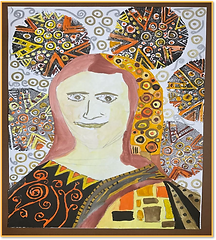
Creative Outcome (Divergent task) – Mixed Media Mona Lisa
The unit of work completes with the creative outcome (divergent task) activity that can be delivered over two or more sessions. These sessions can also be used for children to complete activities from sessions 1-4. The creative outcome provides an opportunity for children to apply their knowledge of pattern, colour mixing and the style and techniques of Gustav Klimt to create a mixed-media version of the Mona Lisa in the style of Gustav Klimt.
The creative outcome activity provides an opportunity for children to apply their knowledge, skills and understanding from previous sessions in this unit of work. Through the creative outcome children will develop their creativity and understanding of the creative process by combining their imagination with the knowledge they have acquired.
Learning Sequence
Session 1
In this session children are introduced to the work of the artist Gustav Klimt. The activity in this session focuses on patterns that are a feature of his paintings. Children recall their knowledge of colour mixing, tints and shades of colours to create the colours featured in his most iconic works of art. Working in their sketchbooks, children develop their knowledge and understanding of pattern by mimicking the work of Gustav Klimt.

Session 2
In this session children deepen their knowledge and understanding of the paintings of Gustav Klimt through studying his Tree of Life painting. Children draw a simple version of the tree mimicking the lines, shapes and patterns used to create the composition. Having completed the drawing, they create a mixed-media interpretation of the painting of the Tree of Life.

Session 3
In this session children build on their learning from the previous session to create a relief print based ion a design in their sketchbook for the Tree of Life painting. This provides an opportunity to introduce/consolidate children's knowledge of the techniques of printmaking to create art. Children etch their design into a circle of polystyrene which is used as a printing block to create an image in their sketchbook.

Session 4
In this session children learn about the portraiture work of Gustav Klimt and how he was influenced by the Roman mosaics at Ravenna in Italy. Learning focuses on two iconic pieces of his work, The Kiss and the portrait of Adele Bloch. Through understand the style and technique of these paintings, children create a self-portrait in the style of Gustav Klimt using a black and white headshot photograph of themselves as the starting point.

Creative Outcome
In this session children learn about the iconic painting of the Mona Lisa by Leonardo Da Vinci. The creative outcome provides an opportunity for children to apply their knowledge of pattern, colour mixing and the style and techniques of Gustav Klimt to create a mixed-media version of the Mona Lisa in the style of Gustav Klimt. They create a printed background and a portrait of the Mona Lisa. they then combine both using collage technique to create the final composition.